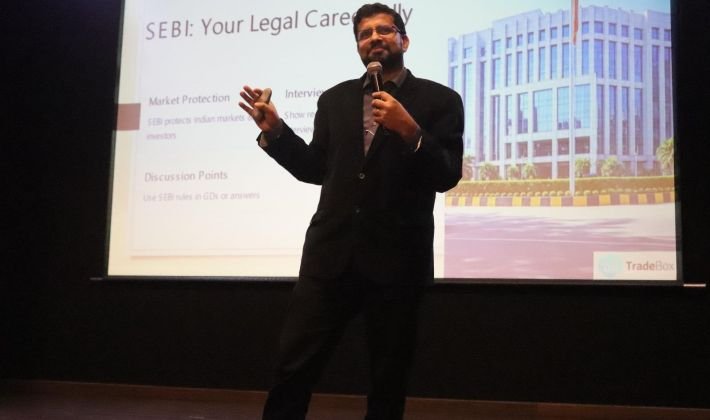
Becoming a SEBI Registered Investment Adviser: My Honest Journey
Becoming a SEBI Registered Investment Adviser: My Honest Journey
I became a SEBI Registered Investment Adviser (RIA) in 2019 based in Noida and then CFP professional, but I’ve been actively practicing financial advisory over the last three years.
Before this, my background was in product marketing, though I had been investing in mutual funds and equities since 2003. Achieving some level of financial independence (FI) gave me the confidence to pursue advisory work full-time — without unrealistic income pressure.
Yet, for those seeking a stable, ethical, long-term advisory career, becoming an RIA is absolutely worth it. If you’re looking for quick income replacement, I would say — think again.
Why I chose the fixed-fee RIA model
I became a fixed-fee RIA because it aligned with my values. Earning commissions on products never sat well with my approach to advice.
With guidance from senior RIAs and the community, I was clearly told:
- Income will not come immediately. You need months—sometimes years—to build trust and credibility.
Anyone expecting recurring income from the first month after RIA or CFP certification is setting themselves up for disappointment. This profession rewards patience, consistency, and integrity.
Building credibility before income
The real work starts after the SEBI RIA license:
• Creating a professional website with on-page and off-page SEO
• Setting up and optimizing Google My Business for local discovery with emphasis on financial planner noida and delhi NCR
• Actively participating on LinkedIn— especially for prospects outside your city
• Building a digital footprint that reflects trust and competence i.e.Quora , Reddit, Twitter
Contrary to popular belief, friends, family, and ex-colleagues are rarely your first clients. People usually don’t want their closest circle to hear about their financial worries.
More often, it’s the friend of a friend.
Who is this profession really suited for?
Based on my experience, ideal RIA candidates are:
• Age 30+ (I would peg at 35+) with strong fundamentals on personal finance space(can be through self-learning)
• Minimum 5+ years of work experience (more the better)(not necessary from finance field)
• Strong service mindset, Deeply client-first and fiduciary in approach , Sales-oriented as well
• Willing to invest 2 years with limited income expectations
• Tech-savvy enough to build a digital presence
• Strong foundation in mutual funds, insurance , equities, global investing and personal finance topics,
While it offers ethical, conflict-free advice, it comes with heavy compliance, strict fee caps, no commission income. Income scalability is limited, client resistance to paying fees is common, and regulatory changes add uncertainty.
What accelerated my learning curve
Over the last 2–3 years, I partnered with multiple fintech startups aiming to transform personal finance. This exposure helped me deliver 700+ financial plans for Indian residents and NRIs across the US, Europe, and the Gulf.
For a niche profession like fixed-fee financial advisory, what worked far better for me was a combination of localised networking and a strong digital footprint.
More than technical skills, this taught me to deeply understand the emotional biases and behavioural challenges clients face through their financial journeys.
The underrated advantages of being an RIA
• No retirement age — you can practice as long as health permits
• Client acquisition rarely comes from mass marketing or cold outreach.
• All clients come through inbound digital discovery and referrals
• Strong referral flow, minimal drop-offs, zero time wasted on cold calls
• Prospects already understand the SEBI RIA model before reaching out
Robins Joseph , SEBI Registered Investment Adviser , Certified Financial Planner. Founder of MyGuide2Wealth (www.myguide2wealth.com), https://share.google/ZK3ZWqQao6KgsC0vU based in Noida specializing in wealth, investment, retirement services with clear aim of Spreading financial literacy and advocating on India's strong equity story